
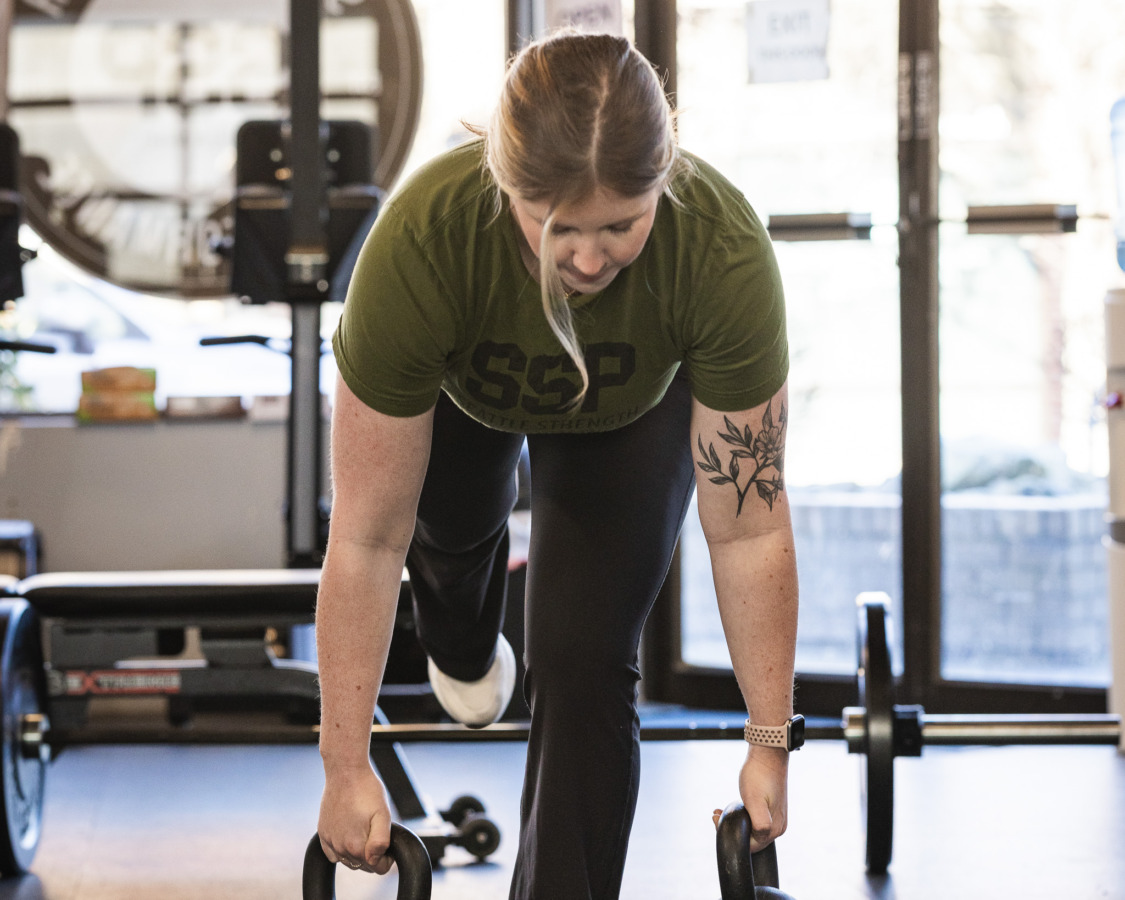
This is a sponsored post by Seattle Strength & Performance
If you’ve been showing up to the gym consistently, putting in the work, and still feel like your progress has stalled there’s a good chance it comes down to one thing: progressive overload.
It’s not the most exciting concept. It doesn’t have a great marketing hook. But it is, without question, one of the most important principles in all of strength training. And it’s the one that gets skipped over most often.
What Is Progressive Overload?
Progressive overload simply means that over time, you’re asking your body to do a little more than it did before.
That could mean lifting a heavier weight. Doing more reps with the same weight. Adding an extra set. Moving through a greater range of motion. Resting less between sets. Moving more slowly and with more control. There are a lot of ways to apply it but the underlying idea is the same. Your body adapts to whatever you ask of it. If you keep asking the same thing, it stops adapting.
Think of it this way. The first time you carried a heavy box up a flight of stairs, it was hard. The tenth time, your body had figured it out. The stimulus hadn’t changed, so the adaptation stopped. Strength training works the same way. The body is remarkably good at becoming efficient which means if your training never changes, your results eventually won’t either.
Why It Matters More Than Most People Realize
A lot of people assume that as long as they’re exercising consistently, progress will follow. And that can be true especially early on. In the first few months of training, almost anything works because your body is responding to a new stimulus.
After the initial adaptation period, your body needs an ever increasing stimulus to keep changing. That reason is progressive overload. Without it, you can exercise indefinitely and maintain what you have (which is still important) but you won’t continue building strength, improving your movement, or developing the physical capacity that makes everyday life feel easier.
The goal of strength training isn’t just to burn calories or feel tired afterward. It’s to build a body that is genuinely stronger, more capable, and more resilient over time. Progressive overload is the mechanism that makes that happen.
What It Looks Like in Practice
The good news is that progressive overload doesn’t require dramatic changes week to week. In fact, small, consistent progressions over time are far more effective than trying to make big leaps and burning out.
Here are some of the most practical ways to apply it:
Add a little weight. This is the most straightforward version. If you squatted 95 pounds for three sets of eight last week and it felt manageable, try 100 pounds this week. Even a small increase is progress — and those small increases add up significantly over months and years.
Add reps before you add weight. A useful approach is to pick a rep range (a good reference is between 8 and 12 reps) and work within it. When you can complete the top of that range comfortably with good form, that’s your signal to increase the weight and start back at the lower end of the range.
Add sets over time. Volume refers to the total amount of work that you do and is one of the most important drivers of strength and muscle development. Gradually adding sets to your program over a training cycle is a simple and effective form of progressive overload that doesn’t require touching the weight at all.
Improve the quality of the rep. This one gets overlooked. Moving through a greater range of motion, slowing down the lowering phase of a lift, or pausing at the bottom of a squat all increase the demand on the muscle without adding a single pound to the bar. If you’ve been cutting your range of motion short or rushing through reps, cleaning that up is a form of progression.
Reduce rest time. Doing the same amount of work in less time is a legitimate form of overload. This one is best used carefully and not as a constant tool, but it’s worth knowing it’s an option.
A Few Things Worth Knowing
Progressive overload works best when it’s built into your program deliberately, not improvised on the spot. Walking into the gym without a plan and just doing a little more than last time is better than nothing but a structured program that systematically builds volume and intensity over a set period of time is significantly more effective.
It also requires tracking but a simple note in your phone or a training journal works fine. Keep track of what you did: exercises, weights, and reps, each week!
The Bigger Picture
One of the things we talk about a lot at SSP is the difference between exercising and training. Exercise is movement for its own sake and there’s real value in that. Training is movement with a purpose and a plan.
Progressive overload is what separates the two. It’s what turns consistent effort into compounding results. It’s what makes the difference between maintaining and actually getting stronger over months and years. You deserve to feel the outcomes of all the hard work you’re putting in. We aren’t actually asking you to work more or work harder, just to work smarter!
Curious what a program built around your specific goals would look like? Book a free assessment at SSP and let’s figure it out together.