
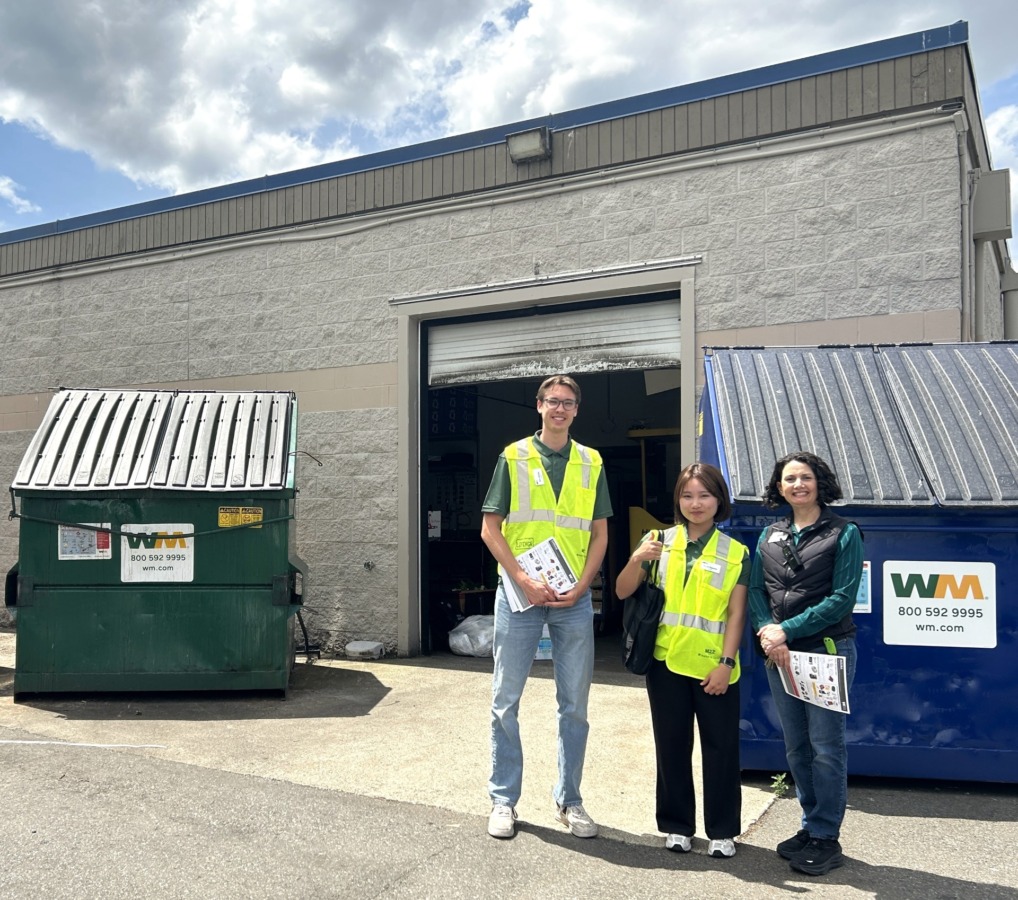
By Eric Melder, special to the Blog
Despite growing up in a household that prioritized recycling and composting, I never grasped the importance of it. From my perspective, our garbage was simply picked up by truck drivers and taken away to some distant landfill or facility. Like most people, I had no visibility into what happened after the truck drove off. I was often confused by the rules of recycling: Why are some plastics recyclable and others not? Do pizza boxes go in the recycling or compost? Should bottle caps be removed before recycling, or is it okay to leave them on? Everyone I asked seemed to have a different answer, which only added to the confusion.
After training as a WM Recycle Corps intern earlier this summer, we began our mission of spreading recycling awareness to communities across Western Washington. Although I was excited to share what I had learned, I quickly realized how difficult it can be to have meaningful conversations about recycling, compost and garbage. Growing up in Seattle, I hadn’t realized that many communities in Washington don’t compost-or even recycle. I had to shift my approach, recognizing the importance of understanding the perspectives of those in less resourced areas. Instead of entering these conversations assuming I had all the answers, I found it far more effective to listen and learn.
One customer interaction that stood out was at an apartment complex in Redmond. After greeting the property manager and telling her the reason for our visit, she immediately showed interest and had questions for us. We had a great conversation about recycling and were able to offer resources to help her residents Recycle Right®. Near the end of our conversation, she mentioned how she bought specific “recyclable” plastic bags for her recyclables. My fellow intern and I immediately stopped her and informed her that plastic bags cannot go in the recycling. We told her that even though some plastics are advertised as recyclable, they’re not accepted by WM curbside pickup. She was surprised and appreciated us telling her so she wouldn’t mistakenly continue using them. This interaction, as well as many others I had this summer, showed that despite an interest in recycling properly, there is often a lack of understanding and educational resources available. By asking questions and creating meaningful dialogue, I have been able to educate people and help change recycling habits for the better.
This internship has been an invaluable experience. The hands-on work allowed me to provide direct support where it’s most needed. I’ve learned that creating meaningful change starts at the community level by building relationships, meeting people where they are, and fostering trust. As I move forward in my career, I hope to carry these lessons with me and continue working toward environmental solutions that are inclusive, practical, and impactful
Eric Melder is a 2025 WM Recycle Corps intern originally from Seattle’s Phinney neighborhood. For tips on recycling and waste reduction in Seattle’s Phinney neighborhood, visit the WM website – wmnorthwest.com.